
The old internet: what we miss, and where to find it now
People miss the early internet because it was smaller and more personal. Pages were made by individuals, chat rooms had regulars, and you knew the names. Parts of it are still around.
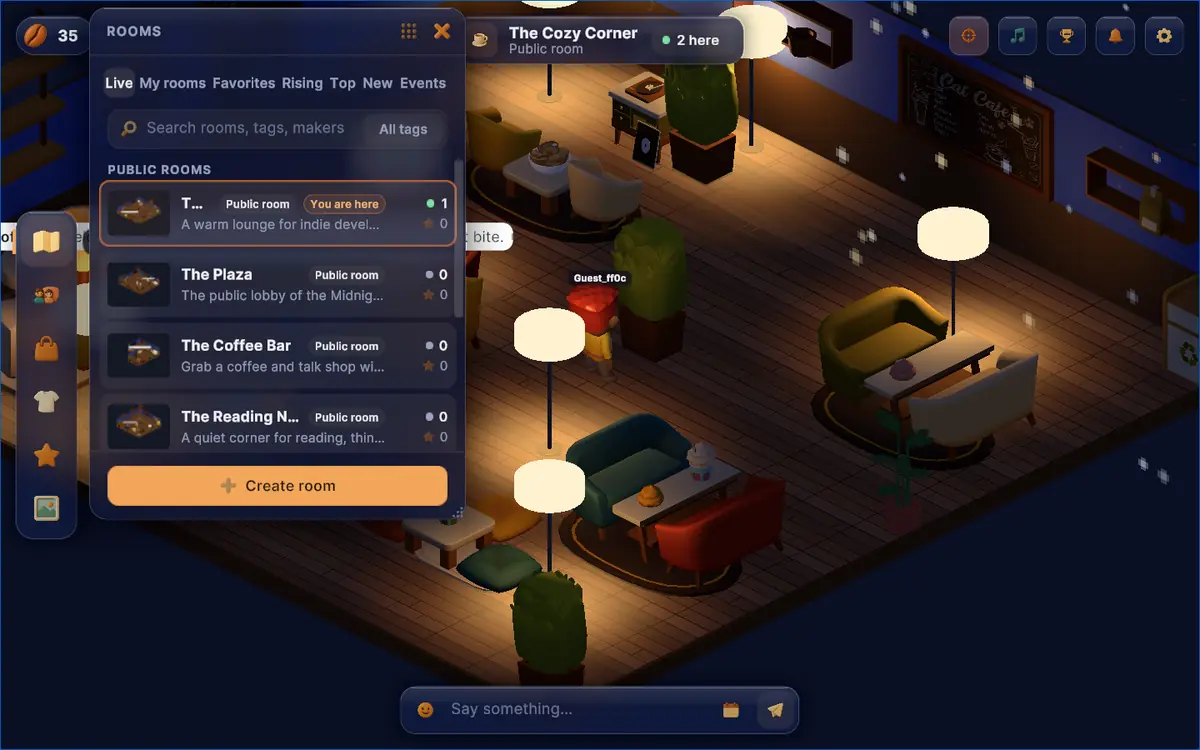
The old internet was homepages, forums, chat rooms and small communities such as GeoCities, webrings, IRC, MSN Messenger, Neopets and Habbo. Some of it is gone and some is still running. The indie web, Neocities, the small web and a few browser worlds keep the same spirit.
When people say "the old internet," they usually mean roughly 1995 to 2008. It was slower and uglier. It also felt like a collection of places made by people, not one feed. This article lists what was there, with dates, what happened to each piece, and where you can still find something like it.
What it was like
There was no single place to be. You had a personal homepage, a favorite forum, a chat room, an instant messenger list and perhaps a game world. Each of them had its own people. You saw the same names again and again, and over time you knew them.
A few things made it feel that way:
- Pages were handmade, and looked it.
- Communities were small enough for regulars to know each other.
- You went to a place on purpose. Nothing was fed to you.
- Most of it was made by people for fun, not to sell something.
That is a memory, and memory is generous, so it is worth being honest about it here. There was spam, bad design and plenty of cruelty. But the scale was different, and many people say they miss that.
The places, with dates
GeoCities
GeoCities let anyone make a free homepage. According to Wikipedia, it was founded in November 1994, Yahoo! took control of it on 28 May 1999 after a deal announced that January, and the US service closed on 26 October 2009.
Webrings
A webring links sites on a theme in a circle, each with links to the previous and next member. The Wikipedia article on webrings says Sage Weil founded WebRing in June 1995, that search engines made them less useful by 2001, and that webring.com became inaccessible by August 2020.
IRC
Internet Relay Chat was created by Jarkko Oikarinen in Finland in August 1988, according to the Wikipedia article. Its use has declined since its peak, but it is still running. The article says the top 100 IRC networks served more than 162,000 users at a time as of 2026.
MSN Messenger
Launched on 22 July 1999 as MSN Messenger Service, and discontinued in 2013, with users moved to Skype. The Wikipedia article says the move began on 8 April 2013, and Brazil was the last country on 30 April. Service in mainland China ended on 31 October 2014.
Neopets
A virtual pet site that launched on 15 November 1999, according to Wikipedia. It is still running. When Adobe ended Flash in January 2021, parts of the site stopped working, and in July 2023 most of the original Flash games were restored through the Ruffle emulator. The article says it is now run by World of Neopia, Inc., and that its players skew older, many drawn by nostalgia.
Habbo
Habbo started as a hobby project in 1999 by Sampo Karjalainen and Aapo Kyrola. The first community, Hotelli Kultakala, launched in August 2000 on a Finnish ISP's web portal, and Habbo Hotel entered beta by the end of January 2001, per the Wikipedia article on Habbo. You had a small avatar, rooms you could decorate and chat bubbles above heads. The same article says it marked 25 years in August 2025.
It had a bad day in 2006, when a group of outside users organized a raid in which they flooded the hotel with avatars, blocked areas and tried to disrupt it. I will not repeat what they wrote. It is part of Habbo's history, though not what most people who played it remember.
In June 2024, Habbo Hotel: Origins appeared, a version of the 2005 client software for adults only. Coverage at launch, such as MacRumors, said it was available on desktop only: you download the client for macOS or Windows and create a new account in the game. The current Habbo site, habbo.com, describes Habbo as a free game that you can play in a browser.
What people miss
I think it comes down to four things.
- Ownership. A page on GeoCities was yours, in a limited way. Today most posts live inside platforms that can change the rules.
- Scale. A forum with 300 active people is a place. A platform with 300 million is a feed.
- Slowness. You waited for a page, a reply or a friend to come online. The wait is part of what people recall fondly.
- Weirdness. Pages had odd colors, music and visitor counters. Nobody optimized them.
The sociologist Ray Oldenburg wrote about "third places," where regulars gather informally. Old chat rooms and hotels had some of those traits, and we look at the idea in the third place, and whether it can be online.
Why so much of it went
There is no single reason, and the sources only support a few pieces of the story. Companies closed services: GeoCities in 2009 and the Messenger service in 2013. Technology moved on: when Adobe ended Flash support in January 2021, parts of Neopets stopped working until the games were rebuilt or emulated. And habits changed. The Wikipedia article on IRC says use fell by about 60% between 2003 and 2012 as people moved to social media and other platforms. Webrings lost their purpose when search engines became good enough to find things, according to the webring article.
None of this means the small internet died. It means it stopped being the default, and you now have to go and look for it.
Where that spirit lives now
The IndieWeb
The IndieWeb is a community of independent, personal websites. Its core idea is that your own domain is your main online identity: you own it, post there first and can share elsewhere if you want. It frames this as an alternative to the "corporate web."
Neocities
Neocities offers free static web hosting with an in-browser HTML editor. Its front page lists about 1,794,300 sites, and says it is funded by supporters and donations, not ads. It is the closest thing to GeoCities today, and many people on it use the old tools: handmade pages, guestbooks and webrings.
The small web
Search engines and feeds that point to personal sites. Kagi Small Web shows recent posts from personal blogs. Wiby is a search engine for the classic web. Marginalia says it prioritizes non-commercial content and helps find lost old websites.
Old places that still run
IRC, Neopets and Habbo, as above. If you want to see GeoCities-era pages, the Internet Archive's site is a digital library that includes texts, movies and music; I did not check what it holds of GeoCities, so search it yourself.
Small chat communities
Discord servers around one hobby are the nearest equivalent to old forums, as regulars know each other. We list some in indie maker communities worth joining.
How to bring some of it back
You do not need to wait for someone to rebuild it. A few small habits recover a lot of the feeling, and none of them cost money.
- Make a page. Even a single page with your name and what you like. Neocities makes it free.
- Put a link to a friend's page on yours.
- Read blogs through a feed or a small web reader, not a platform.
- Pick one small community and show up weekly. The old internet worked because people came back.